

Boat Documentation vs. Registration: The Complete Guide for Ohio Boaters

Boat Documentation vs. Registration: The Complete Guide for Ohio Boaters
If you've been shopping for boats over 25 feet, you've probably seen listings that say "USCG Documented" or "Federally Documented Vessel." And if you're like most Lake Erie boaters, you've wondered: what does that mean, and do I need it?
As Cleveland boat brokers, we field questions about documentation constantly. It's one of the most misunderstood topics in boating—and it matters more than you think when it comes to financing, insurance, and even crossing into Canadian waters.
Here's everything Ohio boaters need to know about boat documentation, state registration, and which one is right for your vessel.
What Is Boat Documentation?
Boat documentation is a federal registration system administered by the United States Coast Guard (USCG) through the National Vessel Documentation Center (NVDC). Think of it as a title and registration system for boats, similar to how the FAA registers aircraft.
When a boat is documented, the Coast Guard issues a Certificate of Documentation with a unique official number (not the same as your hull identification number). The vessel's name, home port, and ownership information are recorded in a national database.
Key point: Documentation is optional for most recreational boats. It's an alternative to state registration, not something that happens automatically.
What Is State Registration?
State registration is the system most Ohio boaters are familiar with. When you register your boat with the Ohio Division of Watercraft, you receive:
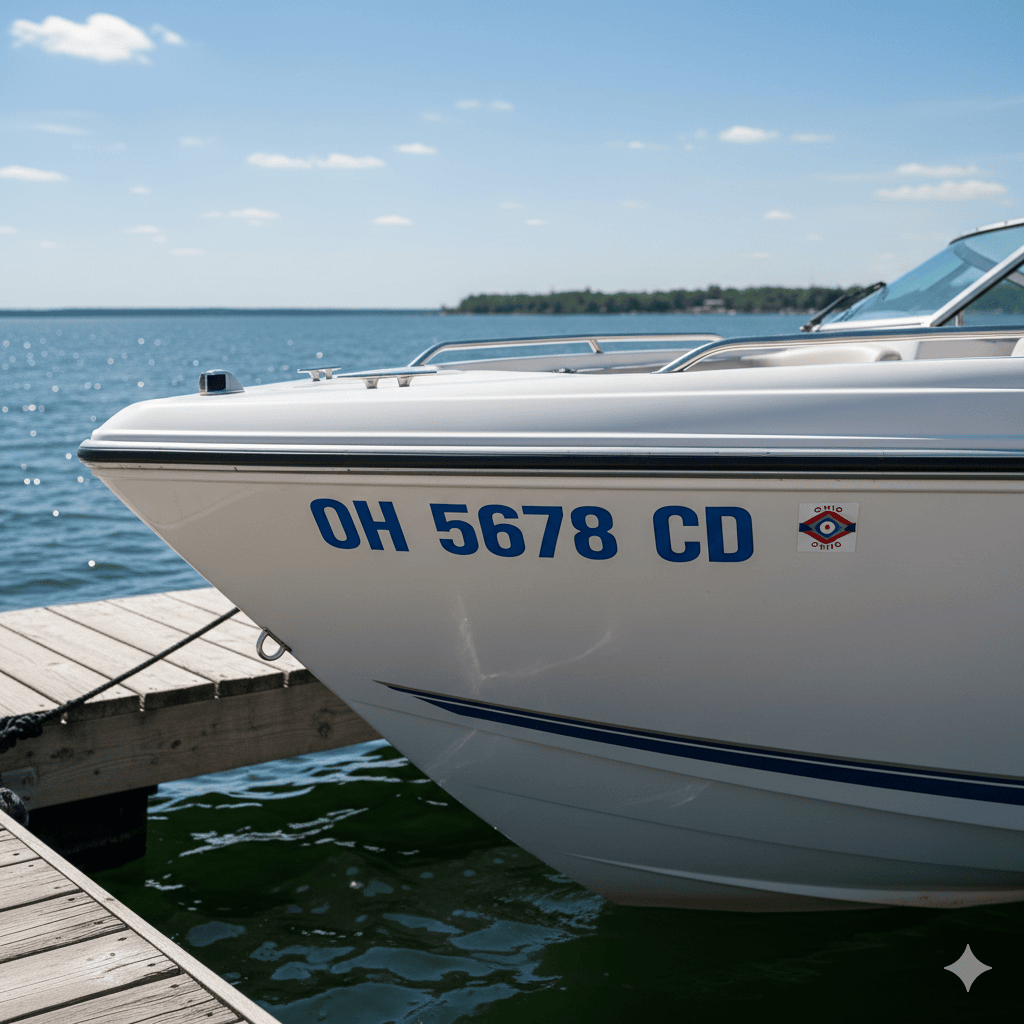
- Registration number (OH 1234 AB format)
- Registration decals for the bow
- Registration card to keep on board
Ohio registration is required for all motorized vessels and sailboats over 14 feet operated on Ohio waters (unless federally documented).
Which Boats Are Eligible for Documentation?
Not every boat qualifies for Coast Guard documentation. Here are the requirements:
Eligibility Requirements:
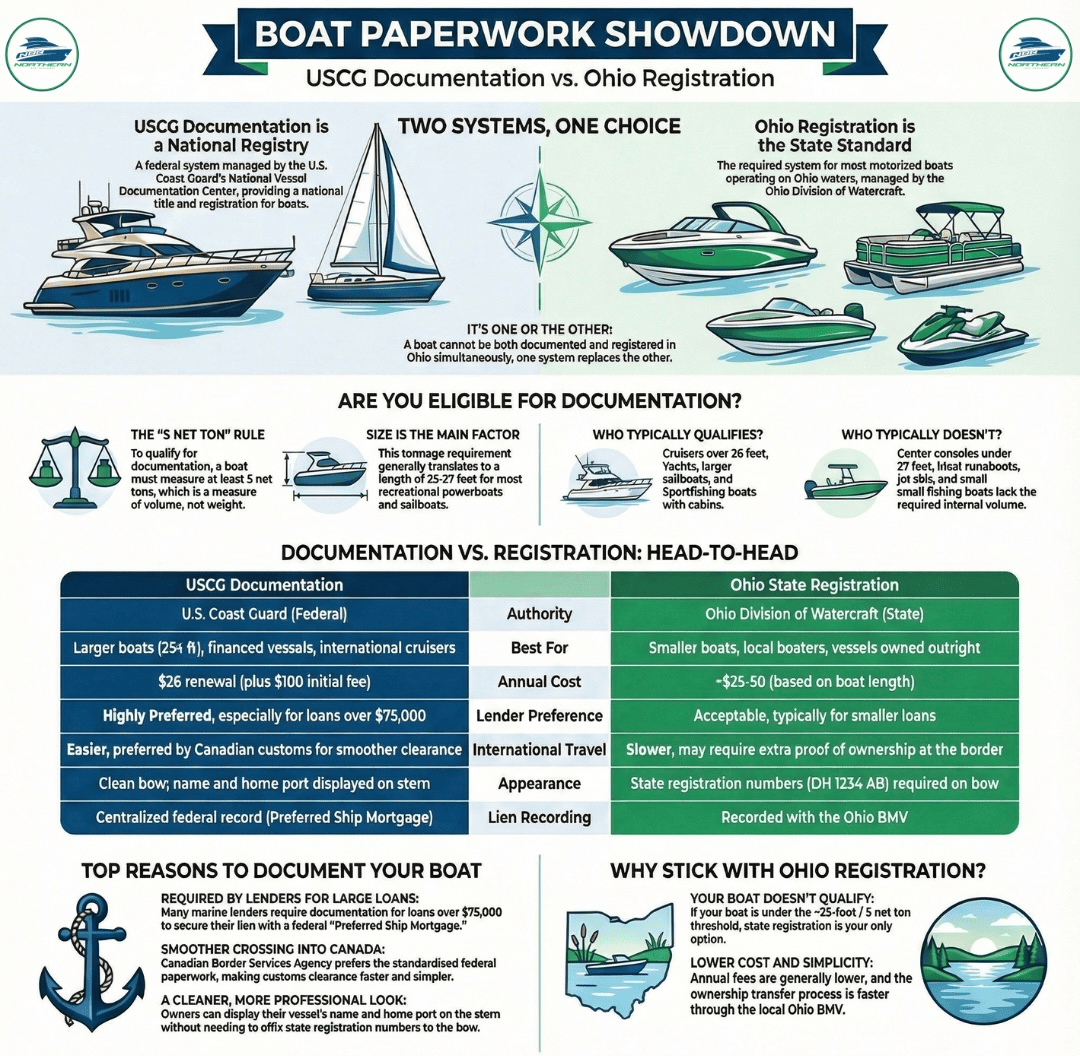
1. Minimum Size: 5 Net Tons This is the big one. Your boat must measure at least 5 net tons, which roughly translates to 25-27 feet in length for most recreational powerboats and sailboats.
How net tonnage is calculated: It's not about weight—it's about internal volume. The formula is complex, but as a rule of thumb:
- Most boats 25 feet and up qualify
- Some 24-footers with large cabins qualify
- Open center consoles under 27 feet often don't qualify (insufficient volume)
2. U.S. Ownership The boat must be owned by a U.S. citizen or entity. Non-citizens cannot document vessels.
3. Built in the U.S. or Legally Imported Foreign-built boats can be documented if they were legally imported and duties were paid.
Boats That Typically Qualify:
- Cruisers 26 feet and up
- Trawlers and yachts
- Larger sailboats (25+ feet)
- Sportfishing boats with cabins
- Larger pontoons (rare, but some qualify)
Boats That Typically Don't Qualify:
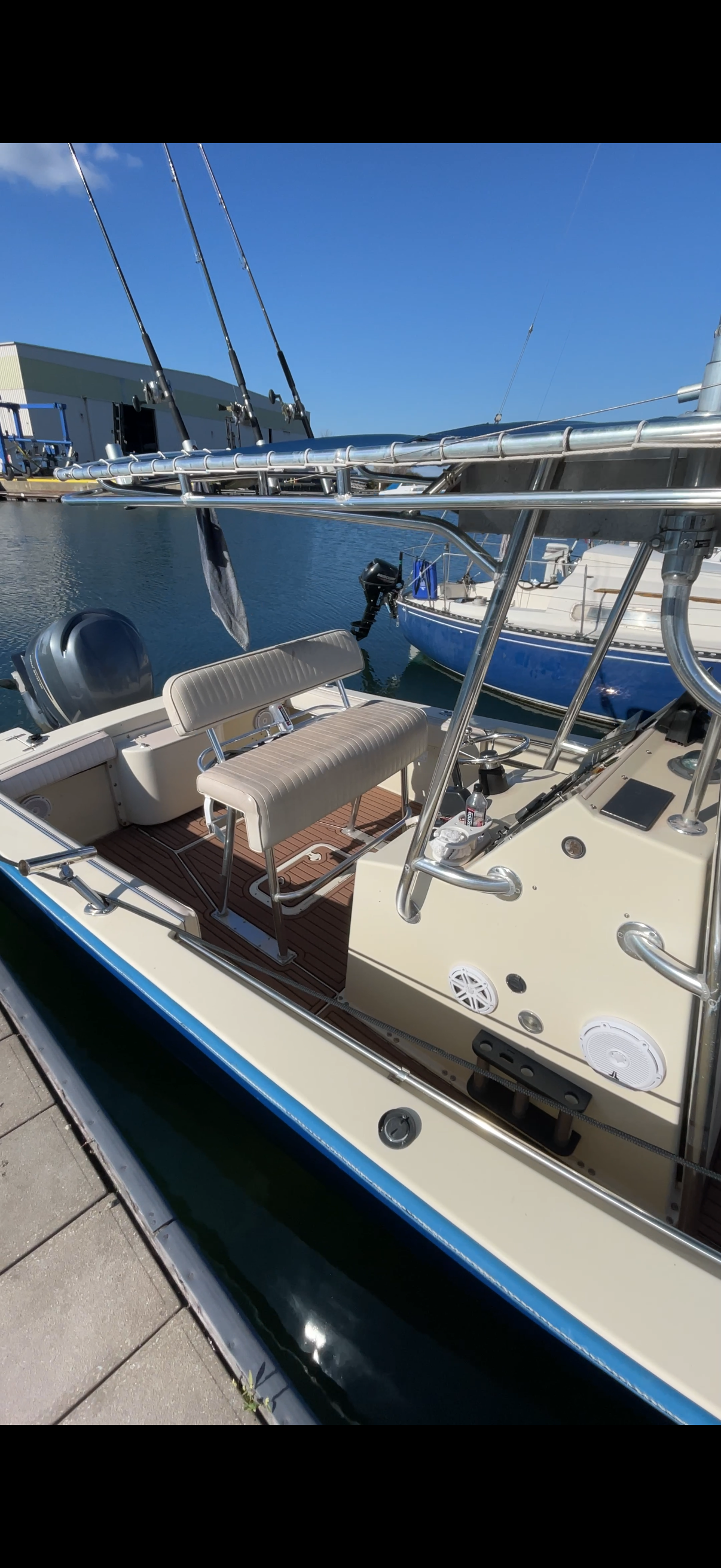
- Center consoles under 27 feet (not enough interior volume)
- Most runabouts and bowriders (under 25 feet)
- PWC and jet skis (way too small)
- Small fishing boats and walleye boats
Documentation vs. Registration: Key Differences
| Feature | USCG Documentation | Ohio State Registration |
|---|---|---|
| Who Issues It | U.S. Coast Guard (federal) | Ohio Division of Watercraft (state) |
| Eligibility | Boats 5+ net tons (~25+ feet) | All motorized boats, sailboats 14+ feet |
| Cost | $100 initial + $26/year renewal | ~$25-50 annually (based on length) |
| Required? | Optional (except commercial) | Required unless documented |
| Hull Numbers | Not required on bow | Required (OH 1234 AB format) |
| Preferred by Lenders | Yes (easier to file liens) | Sometimes, for smaller loans |
| Crossing to Canada | Easier, preferred by customs | Requires extra paperwork |
| Nationwide Validity | Valid in all states | Valid nationwide but some states have extra fees |
| Lien Recording | Recorded federally with USCG | Recorded with Ohio BMV |
| Privacy | Ownership info is public record | Ownership info is public record |
Why Would You Document Your Boat?
If documentation is optional, why do it? Here are the main reasons:
1. Financing Requirements
Many marine lenders require documentation for loans over $50,000-$100,000. Why? Because documented vessels have liens filed with the Coast Guard, creating a clear federal record that's easier to enforce across state lines.
Example: You finance a $150,000 yacht. Your lender will likely require documentation so they can file a preferred ship mortgage with the USCG. If you default, they can repossess the boat anywhere in the U.S. without dealing with 50 different state lien systems.
2. Crossing International Borders
If you plan to cruise to Canada (Port Dover, Toronto, Georgian Bay), documentation makes customs clearance smoother. Canadian Border Services Agency prefers documented vessels because the paperwork is standardized federally.
With documentation: You call in via Nexus Marine or use CBSA's app, provide your documentation number, and you're cleared.
Without documentation: You'll need your Ohio registration, bill of sale, and sometimes additional proof of ownership. It works, but it's slower.
3. Offshore and Coastal Cruising
Planning to take your boat down the Atlantic coast or through the Great Loop? Documentation provides proof of U.S. registry when entering foreign ports or transiting international waters.
4. Preferred Ship Mortgage
Only documented vessels can have a "preferred ship mortgage"—a federal lien that takes priority over other claims. This is critical for lenders and why they push documentation on larger boats.
5. Professional Image
Some yacht clubs and marinas view documentation as a mark of a serious vessel. It's not required, but there's a certain prestige to it in the cruising community.
6. No Hull Numbers on the Bow
Documented vessels display their name and home port on the stern, but they don't need registration numbers on the bow. For aesthetic reasons, many owners prefer the clean look.
Why Would You Stick with State Registration?
Documentation isn't always the better choice. Here's when Ohio registration makes more sense:
1. Your Boat Doesn't Qualify
If your boat is under 25 feet or lacks sufficient net tonnage, you don't have a choice—you must use state registration.
2. Lower Costs
Ohio registration costs $25-$50 per year depending on length. Documentation costs $100 initially, then $26 per year renewal. For a boat you're not financing and not taking to Canada, that's extra expense for little benefit.
3. You're Not Financing
If you own your boat outright and have no plans to finance or refinance, documentation offers minimal advantage.
4. You Stay Local
If your boating is limited to Lake Erie and Ohio waters with no plans to cross into Canada or cruise the Loop, Ohio registration handles everything you need.
5. Privacy Concerns
Both systems make ownership public, but documented vessels are in a searchable national database. Some owners prefer the slightly lower profile of state registration.
6. Simpler Ownership Transfers
Transferring ownership of a state-registered boat is faster—just sign the title and file paperwork with the Ohio BMV. Documented vessels require Coast Guard processing, which can take 4-8 weeks.
How to Document Your Boat: Step-by-Step
If you decide documentation is right for you, here's the process:
Step 1: Verify Eligibility
Measure net tonnage: You can calculate this yourself using the simplified tonnage formula, or hire a marine surveyor to do it officially. Most surveyors charge $100-$200 for a tonnage measurement.
Formula (Simplified Measurement System): Net Tonnage = (L x B x D x 0.67) / 100
Where:
- L = Length overall (feet)
- B = Beam at widest point (feet)
- D = Depth (from underside of deck to inside of hull, feet)
- 0.67 = Constant for enclosed spaces
Most boats 26+ feet automatically qualify. If you're borderline (24-25 feet), get a professional measurement.
Step 2: Choose Your Documentation Type
The Coast Guard offers several documentation endorsements:
Recreation (most common for pleasure boats): For recreational use only Fishery: For commercial fishing Coastwise: For transporting passengers or cargo for hire Registry: For international voyages
Most Lake Erie boaters choose "Recreation."
Step 3: Choose a Home Port
Your home port is displayed on your transom along with the vessel name. It doesn't have to be where you physically dock—it can be anywhere in the U.S.
Popular choices for Cleveland boaters:
- Cleveland, OH
- Sandusky, OH
- Port Clinton, OH
- Your actual city (Lakewood, Rocky River, etc.)
Step 4: Gather Required Documents
You'll need:
- Builder's Certification (from manufacturer showing build date and HIN)
- Bill of Sale (if purchased used, showing chain of ownership)
- Previous registration or documentation (if applicable)
- Proof of U.S. citizenship (passport, birth certificate)
- Application for Initial Documentation (CG-1258)
- Tonnage measurement (if borderline size)
Step 5: Submit Application to USCG
Two options:
Option A: Directly to USCG Mail everything to:
National Vessel Documentation Center
792 T.J. Jackson Drive
Falling Waters, WV 25419
Processing time: 6-12 weeks
Option B: Use a Documentation Service Companies like BoatUS Documentation Service handle everything for you—they review your paperwork, submit it, and follow up. Cost is $150-$350 depending on complexity.
Processing time with service: 4-8 weeks
Step 6: Pay Fees
- Initial documentation: $100
- Annual renewal: $26
Fees can be paid via check, credit card, or online through the USCG website.
Step 7: Receive Your Certificate
Once processed, the Coast Guard mails your Certificate of Documentation. This is your official proof of ownership and must be kept on board at all times.
Step 8: Mark Your Vessel
Remove your Ohio registration numbers from the bow (no longer required). You must display:
- Vessel name on the stern (port and starboard sides)
- Home port below the name
- Minimum lettering: 4 inches tall, contrasting color
Example:
LAKE EFFECT
Cleveland, OH
The documentation number does NOT go on the hull—it's only on your certificate.
Maintaining Your Documentation
Documentation isn't a one-time thing. Here's what you need to stay legal:
Annual Renewal
Documentation expires every year. The Coast Guard mails renewal notices 60-90 days before expiration. Renewal fee is $26 and can be done online at www.uscg.mil/nvdc.
Miss the renewal? There's a grace period, but your documentation becomes invalid. You'll need to re-register with Ohio until you renew.
Ownership Changes
If you sell the boat, the new owner must apply for documentation transfer. This involves:
- Bill of sale
- Application for transfer (CG-1258)
- Fee ($100)
- 4-8 weeks processing time
During this time, the boat can operate under the previous documentation, but the new owner should carry the bill of sale as proof of purchase.
Name or Home Port Changes
Want to rename your boat or change the home port? Submit:
- Application for change (CG-1258)
- Fee ($26 for name change, $0 for home port)
- 3-6 weeks processing time
Meanwhile, you operate under the old name/port until the new certificate arrives.
Address Changes
When you move, update your address with the USCG within 30 days (it's a federal requirement). This can be done online for free.
Can You Switch from Registration to Documentation (or Vice Versa)?
Yes, but there are steps involved.
Switching from Ohio Registration to USCG Documentation
- Apply for documentation (process above)
- Once your Certificate of Documentation is issued, surrender your Ohio registration to the Ohio Division of Watercraft
- Remove registration numbers from bow
- Add name and home port to stern
You cannot operate with both simultaneously. One replaces the other.
Switching from Documentation to Ohio Registration
- Request deletion of documentation from the USCG
- Pay deletion fee ($75)
- Once deletion is processed, apply for Ohio registration
- Display Ohio registration numbers on bow
- Remove name/home port from stern (optional—you can keep it)
Why would you do this? Usually when downsizing to a smaller boat that doesn't qualify for documentation, or when you want to avoid renewal fees.
Documentation and Liens: What You Need to Know
If you're buying a documented boat, checking for liens is critical.
How to Check for Liens on a Documented Vessel
Option 1: Abstract of Title (Official) Request an Abstract of Title from the USCG for $25. This shows:
- Current owner
- All previous owners
- All recorded liens (past and present)
- Mortgage satisfaction records
How to order: Visit www.uscg.mil/nvdc or call 800-799-8362
Processing time: 7-10 business days
Option 2: Online Lookup (Unofficial) The USCG has a free online database where you can search by documentation number or vessel name. It shows basic info but may not reflect liens filed in the past 30 days.
Why you need this: If you buy a boat with an undisclosed lien, the lien holder can repo the boat from you—even though you're the new owner. Always check before closing.
Common Documentation Mistakes to Avoid
Mistake 1: Not Renewing on Time
Your documentation expires annually. Miss the renewal, and your boat is technically operating illegally. You'll need to scramble to get Ohio registration while you wait for renewal processing.
Mistake 2: Operating with Outdated Name/Port
If your certificate says "LUCKY LADY" and your transom says "SEA BREEZE," you're out of compliance. The displayed name must match your documentation exactly.
Mistake 3: Not Carrying the Certificate On Board
The Certificate of Documentation must be on the boat at all times. Coast Guard and DNR officers can (and do) ask to see it. Keep it in a waterproof pouch.
Mistake 4: Documenting a Boat That Doesn't Qualify
Some brokers or owners claim a 24-foot boat is "documented" when it doesn't meet net tonnage requirements. If the Coast Guard audits and finds it ineligible, your documentation gets revoked and you're stuck re-registering.
Mistake 5: Assuming Documentation Replaces Title
Documentation is not a title. It's proof of registration and nationality. When you sell a documented boat, you still need a bill of sale transferring ownership—just like any other vessel.
Ohio-Specific Considerations
Do You Need Both Documentation and Ohio Registration?
No. It's one or the other. If your boat is documented, you don't register it with Ohio (and vice versa).
What About Ohio Taxes?
Sales tax still applies. Documentation doesn't exempt you from Ohio's 5.75% sales tax when you purchase the boat.
Using Ohio Lakes and Rivers
Documented vessels have full access to Ohio waters. Lake Erie, inland lakes, rivers—documentation is treated the same as registration by Ohio DNR.
Getting Pulled Over by Ohio DNR
If an officer stops you on Lake Erie, they can ask for:
- Your Certificate of Documentation (or Ohio registration if not documented)
- Boater education card (if required for your age)
- Safety equipment (life jackets, fire extinguisher, etc.)
Make sure your documentation is current and on board.
Should You Document Your Boat? The Northern Boat Brokerage Take
Here's our honest recommendation based on years of helping Cleveland boaters:
Document Your Boat If:
✅ You're financing over $75,000 (lender will likely require it)
✅ Your boat is 30+ feet and you're serious about cruising
✅ You plan to cross into Canada regularly
✅ You're doing the Great Loop or extended coastal cruising
✅ You want the flexibility to refinance or sell to buyers who need documentation
Stick with Ohio Registration If:
✅ Your boat is under 26 feet
✅ You own the boat outright with no financing
✅ Your boating is limited to Lake Erie and Ohio waters
✅ You're not crossing into Canada
✅ You want to save money on annual fees
Still not sure? Call us. We'll look at your specific situation (boat size, usage, financing, plans) and tell you what makes sense.
How Northern Boat Brokerage Can Help
We handle documentation for clients all the time. Here's what we do:
For Sellers:
- Check documentation status and ensure it's current
- Order Abstracts of Title to verify clear ownership
- Handle documentation transfers to buyers
- Coordinate lien payoffs with documented vessels
For Buyers:
- Research documentation history before you buy
- Verify no outstanding liens exist
- Help you decide if you should document or register
- Connect you with documentation services if needed
- Handle the transfer process from seller to buyer
We also coordinate:
- Marine surveys (required for documentation if vessel condition is questionable)
- Tonnage measurements for borderline boats
- Coast Guard application review (making sure nothing is missing)
You shouldn't stress about documentation paperwork—that's why you hire a broker.
Resources
U.S. Coast Guard National Vessel Documentation Center:
- Website: www.uscg.mil/nvdc
- Phone: 800-799-8362
- Email: [email protected]
Ohio Division of Watercraft:
- Website: www.ohiodnr.gov/boating
- Registration: www.oplates.com/watercraft
BoatUS Documentation Services:
- Website: www.boatus.com/documentation
- Handles applications for members (useful if you're overwhelmed by paperwork)
Final Thoughts
Documentation vs. registration isn't complicated once you understand the trade-offs. Most Lake Erie boaters with boats under 30 feet don't need documentation—Ohio registration is simpler and cheaper.
But if you're buying a larger cruiser, planning to cruise extensively, or financing a significant purchase, documentation makes sense. It's a one-time setup hassle for long-term benefits.
The key is making the right choice for your situation. And if you're buying or selling a boat, we'll make sure the documentation (or registration) is handled correctly so there are no surprises at closing.
Questions about documentation for your boat?
Visit: www.northernboatbrokerage.com or call us at 216-780-5988
We'll walk you through it.